How much is a furnace service call in Sacramento?
Our diagnostic is a flat $89, waived when you book the repair with us, so you never pay for a diagnosis and then a surprise on top. Most furnace repairs land between $150 and $600 on a written flat-rate quote you approve first, with no overtime charge on evenings or weekends.
How often should a furnace be serviced?
Once a year, ideally in the fall before heating season. Annual service keeps the furnace safe and efficient, catches a cracked heat exchanger or worn part early, and is required by most manufacturers to keep the warranty valid. Yes, that means every year, not only when something breaks.
What does a furnace service include?
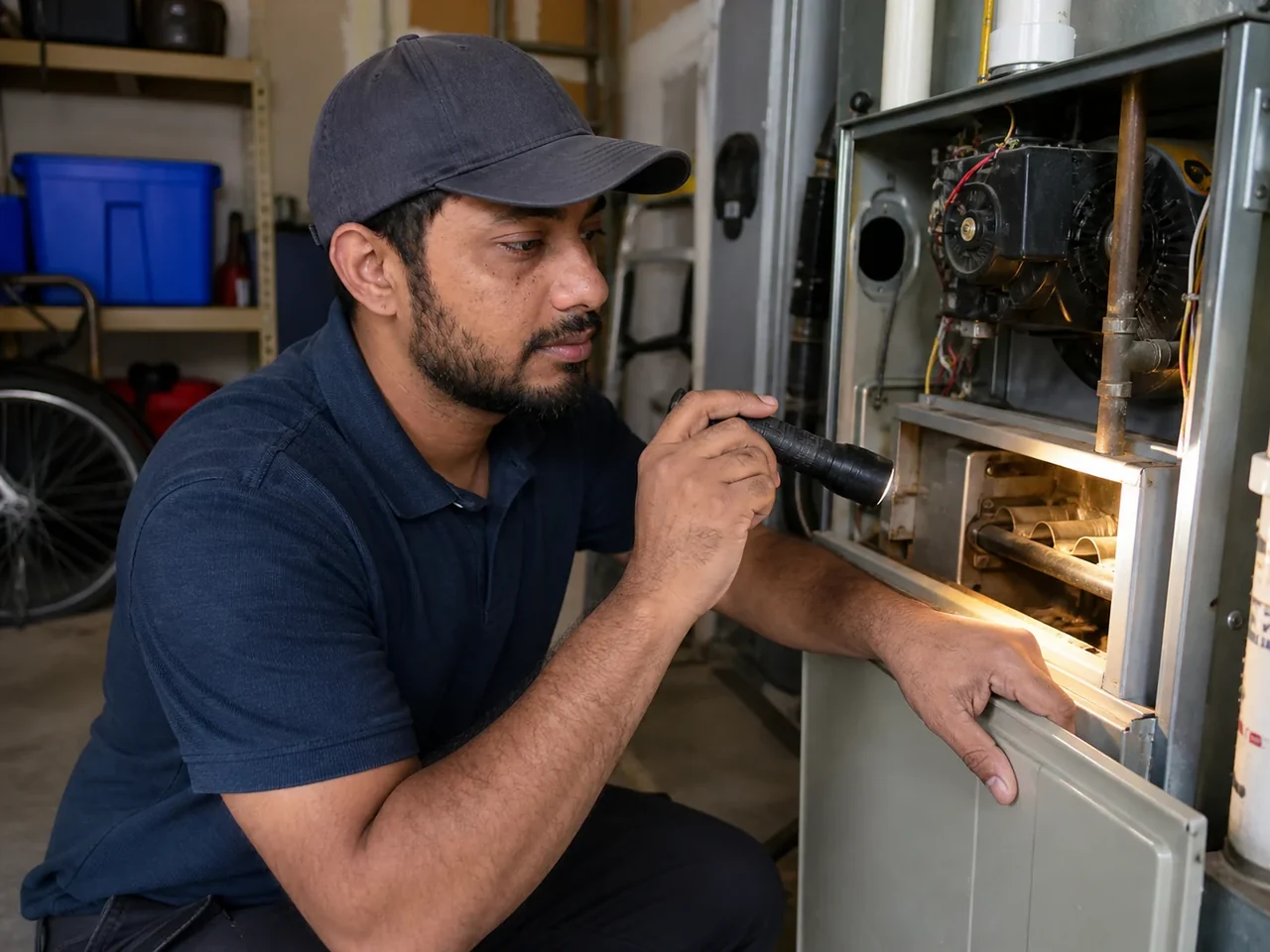
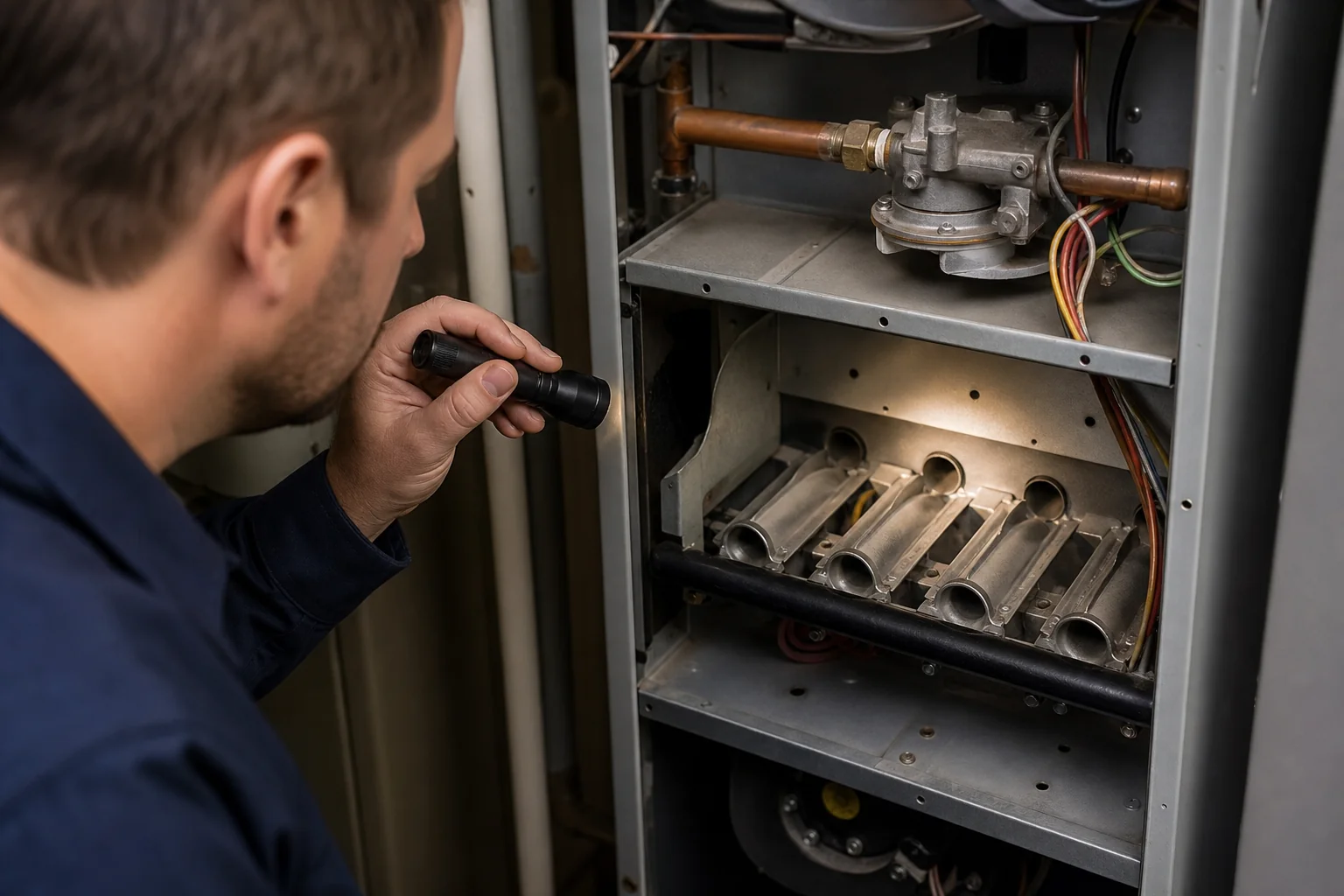
A proper tune-up inspects the heat exchanger for cracks, cleans and tests the burner and flame sensor, checks the igniter, verifies the thermostat and safety controls, tests the blower and airflow, and changes or checks the filter. You get the findings in plain language before any repair is quoted.
What are the signs of a dying furnace?
Watch for a furnace past 15 to 20 years, rising heating bills, frequent repairs, uneven heat between rooms, a yellow rather than blue burner flame, banging or rattling noises, and frequent short-cycling. Soot or a yellow flame means call right away, as it can signal a carbon monoxide risk.
What is the most common furnace problem?
A dirty filter is the single most common cause of furnace trouble. It chokes airflow, overheats the unit, and trips the limit switch into a short-cycle. After that, the usual culprits are a failed igniter or flame sensor, a faulty thermostat, and a worn blower motor. Most are same-visit repairs with parts stocked on the truck.
What is the most expensive thing to fix on a furnace?
The heat exchanger is the priciest repair, and because a cracked one is a safety issue, it often makes more sense to replace the furnace than the part. After that, the blower motor and control board are the costliest common repairs. We give you the repair-or-replace math honestly before you spend.
What happens if you don’t service your furnace?
Skipping service lets efficiency drift down and bills creep up, turns small part wear into a mid-winter breakdown, and can leave a cracked heat exchanger or venting problem unnoticed, which is a carbon monoxide risk. It can also void the manufacturer warranty. Annual service is the cheapest way to avoid the expensive surprises.
How can I tell if my furnace needs cleaning?
Telltale signs are heavy dust from the vents, weak airflow, frequent short-cycling, soot or scorch marks around the burners, and a filter that clogs quickly. If it has been more than a year, it is due. We clean the burner, flame sensor, and blower during a tune-up.
What month is best for a furnace tune-up?
Fall, roughly September through November, before the first cold snap. Servicing ahead of the season means a problem is found on a mild day rather than during the emergency rush, and your furnace is ready the moment you need heat.
Can a handyman replace a furnace?
No. A furnace replacement involves gas and electrical connections, venting, and a permit, and mistakes carry a real carbon monoxide risk. In California it should be done by a licensed HVAC contractor, which also keeps your warranty and inspection valid. ECHA is licensed and insured under CA license #946275.
How do I reset a gas furnace?
First set the thermostat to Heat with fresh batteries and replace a dirty filter. Then flip the furnace’s own power switch off and on, or cycle its breaker, and give it a minute to restart. If it still will not light or keeps shutting off, stop there and call us rather than repeatedly resetting it.
What is the average lifespan of a gas furnace?
A gas furnace typically lasts 15 to 20 years, with an ASHRAE median around 18. Electric furnaces can run 20 to 30. Annual maintenance is the biggest factor in reaching the top of that range and keeping the manufacturer warranty valid.
When should I replace my furnace instead of repairing it?
Lean toward replacement when the furnace is past 15 years and a repair costs more than about half the price of a new unit, or when the age of the furnace times the repair cost climbs past roughly $5,000. A cracked heat exchanger is an automatic replace on safety grounds. We give you the honest call in person with no pressure.
How much does it cost to replace a furnace for a 2,000 sq ft house?
For a typical 2,000 square foot Sacramento home, a furnace replacement generally runs $4,000 to $8,000 installed, depending on efficiency and sizing, with high-efficiency condensing units reaching higher. We size the unit to your home with a load calculation rather than just matching the old box, and give you a written flat-rate quote before any work.
What AFUE furnace should I buy?
An 80 percent AFUE furnace turns 80 cents of every fuel dollar into heat and is the standard, budget choice. A high-efficiency condensing furnace runs 90 to 98 percent AFUE and wastes far less. The jump from 80 to 96 percent adds roughly 30 percent to the upfront price but lowers your gas bill every winter. In Sacramento’s mild climate we help you weigh the payback honestly.
Is a cracked heat exchanger dangerous?
Yes. A cracked heat exchanger can let carbon monoxide, a colorless and odorless gas, into your home’s air. We inspect the heat exchanger on every furnace visit. If we find a crack we shut the furnace down and walk you through the safest path. Keep a UL-2034 CO detector near the furnace and replace it per the manufacturer.
Why does my furnace keep shutting off?
Short-cycling like that is most often a dirty filter restricting airflow and overheating the unit, a dirty flame sensor failing to prove the flame, or an oversized furnace. Start by replacing the filter. If it continues, our diagnostic pinpoints the cause so you are not guessing at parts.
 Review on Google · May 2026