How much does heat pump repair cost in Sacramento?
Our diagnostic is a flat $89, waived when you book the repair with us. Most heat pump repairs land between $150 and $600 flat-rate. Common fixes like a capacitor, contactor, or reversing-valve solenoid are on the lower end; a compressor or refrigerant-circuit repair runs higher, always quoted in writing before we start.
How often should a heat pump be serviced?
A heat pump does need regular service, ideally twice a year, once before cooling season and once before heating season, because it runs in both. Servicing keeps it efficient, protects the warranty, and catches small problems early. A once-a-year minimum is far better than none.
What is done during a heat pump service?
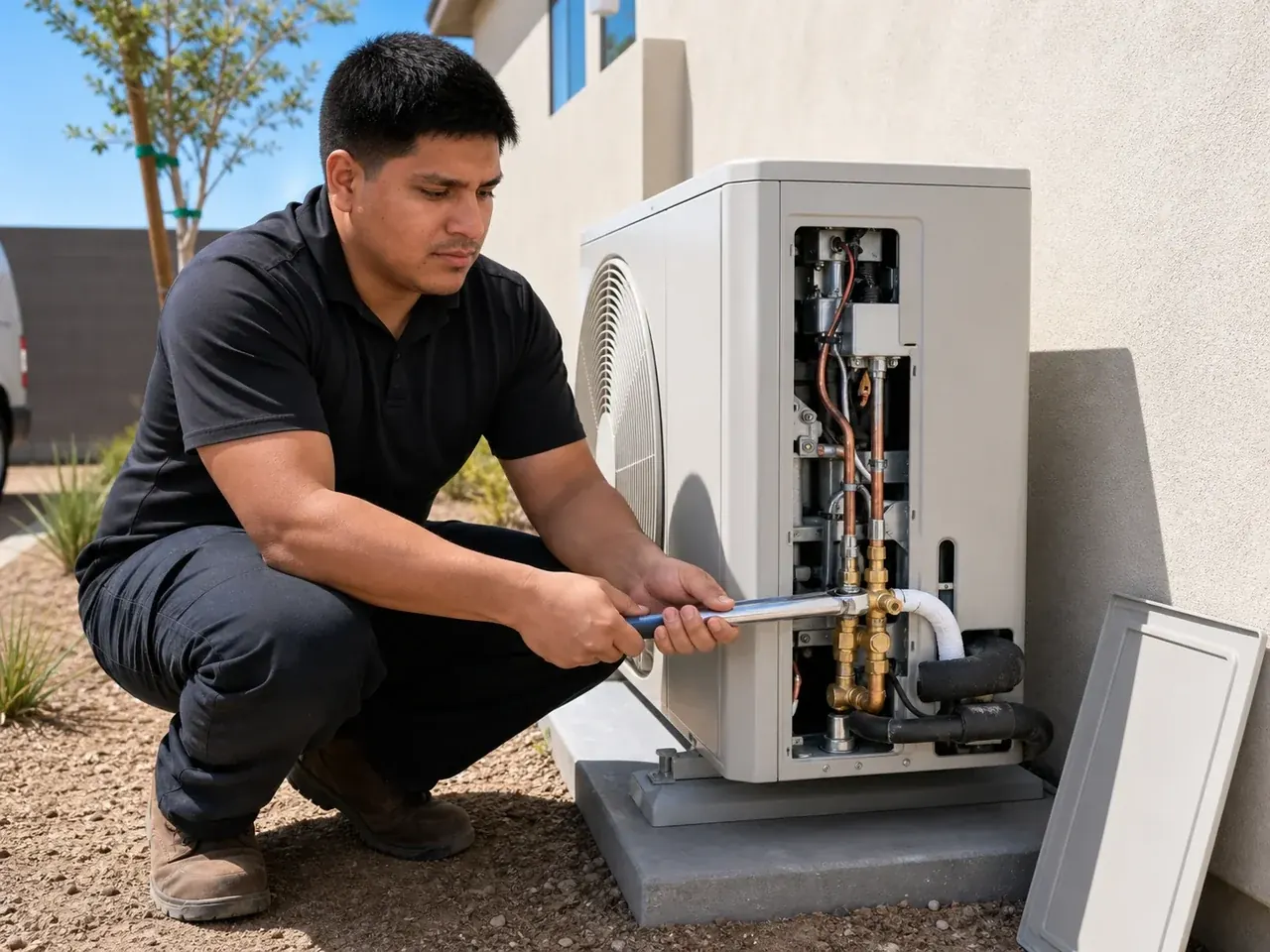
We clean the indoor and outdoor coils, check and adjust the refrigerant charge, test the reversing valve and defrost cycle, inspect electrical connections and the capacitor, clear the condensate drain, check the filter and airflow, and confirm the auxiliary heat only engages when needed.
How much does it cost to get a heat pump serviced?
Our diagnostic visit is a flat $89, waived when you book any needed repair. A seasonal tune-up is a modest flat rate, and a maintenance plan bundles both yearly visits, ask us for current plan pricing. You always get the price before we start.
How long does it take to service a heat pump?
A standard tune-up on one heat pump usually takes under an hour, a little longer if we find and, with your approval, fix an issue on the spot. Because it has an outdoor and indoor half plus a reversing refrigerant circuit, we check both sides every visit.
What is the most common problem with heat pumps?
The most common issues are low refrigerant from a leak, a failed capacitor or contactor, a stuck reversing valve, dirty coils, and a system leaning on its electric backup heat. Many show up first as a high bill or weak heating, and most common parts are stocked on the truck.
Can I clean my heat pump myself?
You can safely keep the outdoor unit clear of leaves and debris, gently rinse the outdoor coil with a garden hose, and change the filter on schedule. Leave the refrigerant, electrical, and reversing-valve work to a technician, both for safety and to protect the warranty.
What happens if you skip regular heat pump maintenance?
Efficiency drifts down and your bill creeps up, a slow refrigerant leak or dirty coil can force the expensive backup heat on, small part wear turns into a breakdown, and the system’s life is cut short. Skipping documented service can also void the manufacturer warranty.
Is it okay for a heat pump to run all night in winter?
Yes. A heat pump is designed to run long, steady cycles, and on a cold night that is normal and efficient, not a sign of trouble. Leave it on the regular heat setting rather than switching to emergency heat, which costs far more to run.
What temperature is too cold for a heat pump?
Efficiency falls as it gets colder, and below the balance point, roughly the mid-30s for a typical system, the electric backup heat starts helping. Modern heat pumps still produce heat well below freezing, and Sacramento rarely stays that cold for long, so a heat pump handles our winters well.
Why is my heat pump running up my electric bill?
The usual cause is heavy use of the auxiliary or emergency electric-resistance heat, which is far less efficient than the heat pump itself. That happens with a big thermostat setback, a cold snap below the balance point, or a system problem like low refrigerant or a dirty coil forcing the backup on. We diagnose which one it is rather than guessing.
What is the difference between heat pump and emergency heat?
The heat pump moves heat and delivers two to four units of heat per unit of electricity, which is why it is efficient. Emergency or auxiliary heat is electric-resistance backup that makes heat directly, roughly one for one, so it costs much more to run. Leave the thermostat on the normal heat pump setting and let the system bring in aux heat only when it needs to.
What is the 20-degree rule for heat pumps?
It is a guideline to avoid spiking your bill: do not set a heat pump thermostat back more than about two degrees at a time. A large setback makes the system call in expensive auxiliary heat to catch back up, which erases the savings you were after. Small, steady adjustments keep the efficient heat pump doing the work.
What is the average lifespan of a heat pump?
A heat pump typically lasts 10 to 15 years, a bit shorter than an AC-only system because it runs year-round for both heating and cooling. Twice-a-year maintenance is the biggest factor in reaching the top of that range.
How do I know when my heat pump needs replacing?
Consider replacement when the unit is past 10 to 15 years, needs frequent or costly repairs, or your bills keep climbing despite maintenance. The $5,000 rule helps: multiply the age by the repair cost, and if it tops about $5,000, lean toward replacing. An older R-410A system facing a major repair is another common tipping point.
How much does a heat pump replacement cost?
It depends on size, efficiency, and whether it is ducted or ductless, but a typical Sacramento home replacement runs in the several-thousand-dollar range installed, with premium variable-speed systems higher. We size it with a load calculation, help you check current utility rebates, and put the exact price in writing before any work.
What refrigerant do new heat pumps use?
As of January 2025, new residential heat pumps use low-GWP A2L refrigerants, mainly R-454B for ducted systems and R-32 for ductless mini-splits, replacing R-410A. You cannot retrofit an older R-410A system to A2L because the pressures and lubricants differ. R-410A is still available to service existing systems for years to come, so a working unit does not need replacing.
Should I get a heat pump or a gas furnace?
In Sacramento’s mild climate a heat pump is often the most efficient choice because it both heats and cools with one system and delivers several units of heat per unit of electricity. A gas furnace can be cheaper to run where natural gas is inexpensive, and California’s higher electric rates narrow the gap, so it depends on your rates and setup. We walk you through the numbers for your home.

 Review on Google · April 2026