What is a C-wire and do I need one?
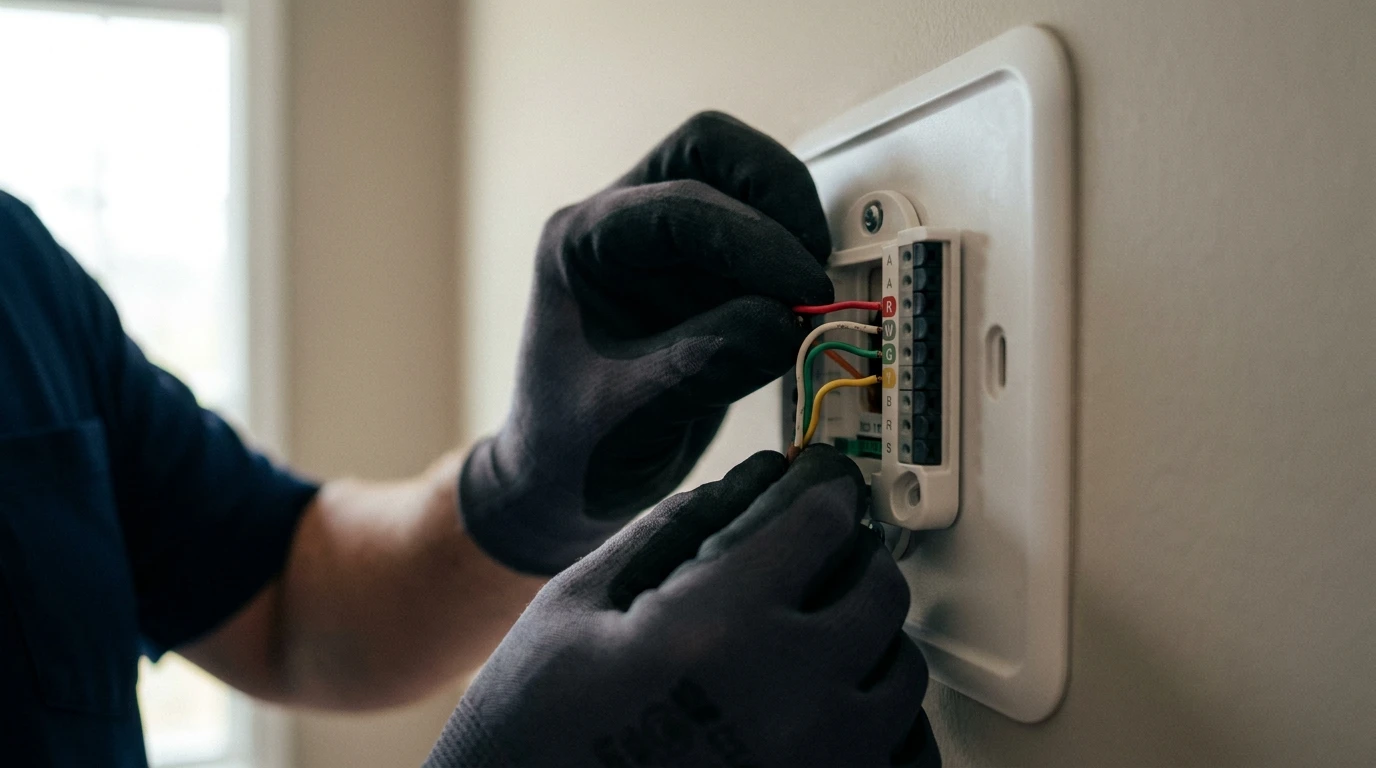
A C-wire, or common wire, delivers continuous power to a smart thermostat so its display, Wi-Fi, and sensors run without draining the system. Many older Sacramento-area homes were wired before smart thermostats existed and do not have one at the thermostat. Most smart thermostats need a C-wire or an approved adapter to work reliably, which is why we check for it before installing.
What if my house does not have a C-wire?
No problem. We can run a new C-wire from the furnace or air handler to the thermostat, or install the manufacturer’s power adapter or a compatible add-a-wire module. On the visit we confirm which approach is cleanest for your system so the thermostat runs reliably rather than randomly rebooting or dropping Wi-Fi.
How much does thermostat installation cost?
A straightforward smart thermostat installation is a modest flat-rate job. If your home needs a C-wire run or an adapter, or wiring cleanup at the furnace, that adds to it. We give you a written flat-rate quote before starting, and if you are already booking other work, we can often bundle the thermostat in efficiently.
Are smart thermostats worth it?
For most homes, yes. A smart thermostat learns your schedule, adjusts automatically, and lets you control the temperature from your phone, which cuts energy waste when nobody is home. In Sacramento’s long cooling season that adds up. The savings depend on your habits and rates, but the convenience and scheduling alone win most people over.
Which thermostats do you install?
We install and set up all the major smart and programmable brands, including Nest, ecobee, Honeywell, and Emerson, as well as basic programmable models if that is what you prefer. We will recommend one that matches your system, especially important for heat pumps, which need a thermostat that controls auxiliary heat correctly.
Do heat pumps need a special thermostat?
Yes. A heat pump needs a thermostat that can control the reversing valve and stage the auxiliary or emergency heat properly. The wrong thermostat, or wrong settings, can run the expensive backup heat far too often and spike your bill. We make sure the thermostat is heat-pump compatible and configured correctly.
Can I install a smart thermostat myself?
You can, but the two things that trip people up are the C-wire and heat-pump wiring. Getting either wrong leads to a thermostat that reboots, drops Wi-Fi, or runs backup heat constantly, and mis-wiring can damage the equipment. If you are unsure about your wiring, a professional install is inexpensive insurance and usually done in one visit.
Will a new thermostat work with my old system?
Usually, but it depends on your system type and existing wiring. Single-stage furnaces and ACs are the simplest; heat pumps, multi-stage, and dual-fuel systems need a compatible thermostat and correct wiring. We verify compatibility before installing so you are not stuck with a thermostat that cannot control your equipment.
How long does thermostat installation take?
A straightforward swap with an existing C-wire usually takes well under an hour, including setup and connecting it to your Wi-Fi and app. If we need to run a C-wire or fit an adapter, it takes a bit longer. Either way we set it up, test heating and cooling, and show you how to use it before we leave.
Do I need an electrician to install a thermostat?
Usually not. A thermostat runs on low-voltage control wiring, which is HVAC work rather than an electrician’s job. The exception is a line-voltage thermostat (common with electric baseboard heat) or when new wiring must be pulled. We handle the low-voltage side and tell you if anything else is needed.
Can I replace my old thermostat with any thermostat?
Not always. The new thermostat has to match your system type, single-stage, multi-stage, heat pump, or dual-fuel, and your available wiring, including a C-wire for most smart models. A basic single-stage system takes almost anything; a heat pump needs a compatible model. We confirm the match before installing.
Where should a thermostat be placed, and where not?
Place it on an interior wall about five feet up, in a central spot with good airflow. Avoid direct sunlight, spots above or near vents and registers, exterior walls, the kitchen, and areas near lamps or electronics, since heat sources there fool the sensor into short or long cycles.
What are common thermostat wiring mistakes?
The usual ones are leaving off the C-wire so a smart thermostat won’t stay powered, mixing up the heat pump reversing-valve terminal, miswiring auxiliary or emergency heat, and not labeling the old wires before removing them. Any of these can leave the system misbehaving or damage the board, which is why we photograph and verify wiring.
What are the signs of a failing thermostat?
Signs include the system not turning on or off when it should, a blank or unresponsive display, a room temperature that does not match the setting, short-cycling, or settings that will not hold. Before replacing it, we rule out dead batteries, a tripped breaker, and a dirty filter.
What is the average lifespan of a thermostat?
A thermostat typically lasts about 10 years, though a quality smart model can last longer with software updates. If yours is aging, unresponsive, or not holding accurate temperatures, replacing it is inexpensive and often improves comfort and efficiency right away.
 Review on Google · April 2026