● Common Questions
Geothermal HVAC FAQ
How it works, savings, lifespan, loop types, land, and incentives.
What is geothermal HVAC and how does it work?
Geothermal HVAC, also called a ground-source heat pump, uses the stable temperature a few feet below ground, roughly 55 to 70 degrees year-round, as the exchange point for heating and cooling. In winter it pulls heat from the earth into the building, and in summer it moves heat from the building into the ground. Because it moves heat instead of burning fuel and works against a mild ground temperature, it is far more efficient than air-source equipment.
Is geothermal HVAC worth it?
For owners who plan to stay in the building for years, it often is. Geothermal costs more up front because of the ground loop, but it delivers the lowest operating cost of any HVAC, very long equipment life, quiet operation, and no outdoor condenser. Whether it pays off depends on the system you’re replacing, your usage, electricity rates, and any incentives, so we run a written payback analysis before you commit.
What are the downsides of geothermal heating?
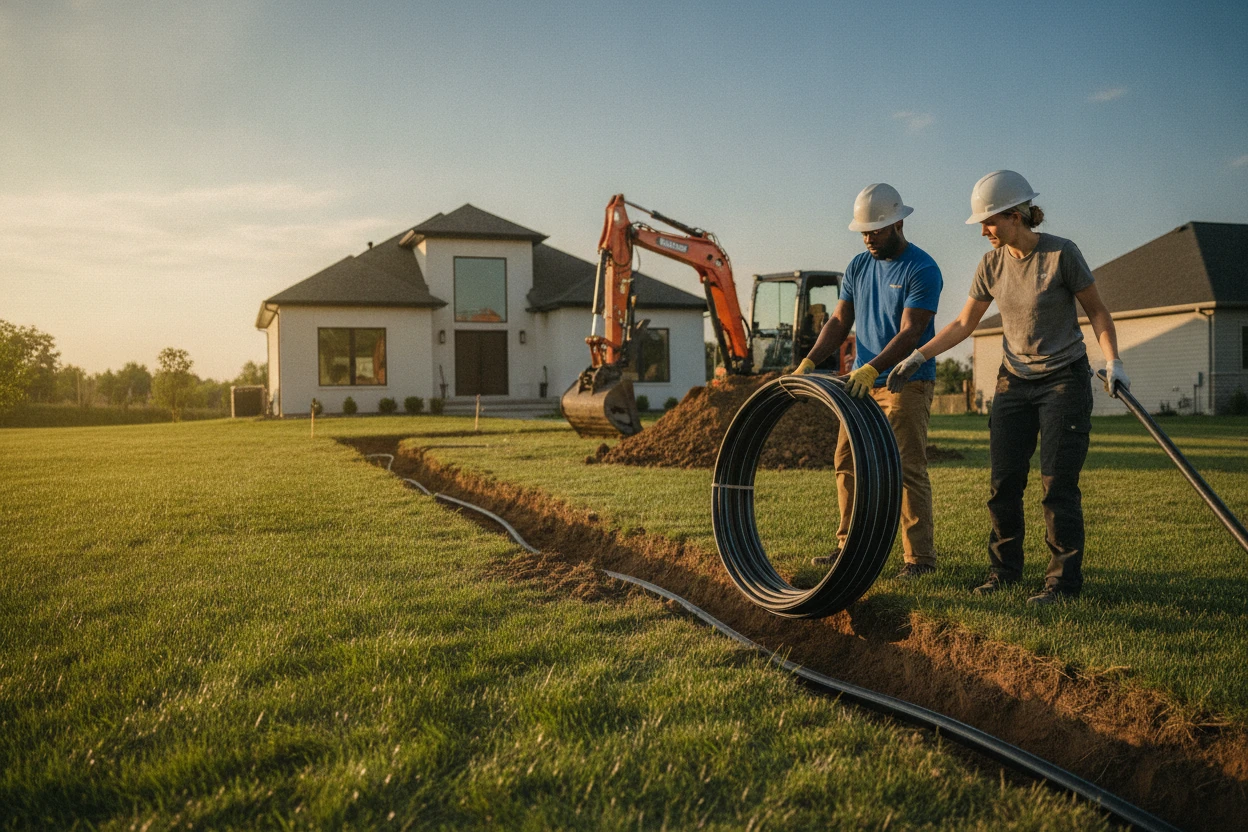
The main downsides are the higher up-front cost and the need for a suitable site, since installing the ground loop requires either trenching for a horizontal field or drilling for a vertical one, which means yard disruption and equipment access. Not every lot fits, and the payback is measured in years rather than months. Once installed, though, it’s low-maintenance and long-lived.
How much does geothermal cost for a 2000 sq ft house?
Geothermal costs more to install than conventional equipment because of the loop field, and the exact figure depends heavily on loop type, drilling or trenching conditions, and the equipment, so we quote each project after a site assessment rather than post a blanket number. A horizontal loop on open land is generally less than a vertical bore on a tight lot. You get the complete installed price in writing before deciding.
How long does a geothermal HVAC system last?
Geothermal systems are among the longest-lived HVAC equipment. The indoor heat pump unit typically lasts around 20 to 25 years, and the underground ground loop can last 50 years or more because it has no moving parts and is protected below grade. That longevity is a big part of the long-term value even though the up-front cost is higher.
How deep do you have to dig for a geothermal heat pump?
It depends on the loop type. Horizontal loops are buried in trenches a few feet down but spread over a wide area, so they need open land. Vertical loops are drilled as boreholes that commonly run a few hundred feet deep, which makes geothermal possible on smaller lots. A site assessment determines which approach your property supports.
How long does it take geothermal to pay for itself?
Payback varies widely with what you’re replacing, your energy use, local rates, and any incentives, but many residential geothermal systems recover their added cost within roughly 5 to 10 years through lower operating bills. After that the savings continue for the decades-long life of the equipment. We model your specific payback period as part of the consultation.
Is there still a 30% tax credit for geothermal in 2026?
Residential geothermal heat pumps have historically qualified for a 30% federal tax credit under the Residential Clean Energy Credit, but 2025 federal budget legislation changed several clean-energy incentives, so the credit’s availability and timing in 2026 may be different. Because this is changing, we don’t promise a specific figure, we provide the equipment documentation you’d need and point you to confirm current eligibility with your tax professional.
Does geothermal use water?
Most residential systems use a closed loop, a sealed underground circuit filled with a water and antifreeze solution that circulates continuously and isn’t consumed. Open-loop systems, where suitable, draw and return groundwater instead. The closed-loop design is by far the most common and uses no water on an ongoing basis. We recommend the loop type that fits your site and water conditions.
Is it normal for geothermal to run all day?
Yes, and it’s actually a feature, not a fault. Geothermal systems, especially variable-speed models, are designed to run longer at low, steady output rather than blasting on and off, which keeps temperatures even and efficiency high. Long, quiet run times using very little energy are normal and expected, not a sign of a problem.
Why is geothermal not more popular?
Mostly the up-front cost and the site work, drilling or trenching for the loop is a bigger project than dropping in an air-source unit, and awareness is lower than for conventional systems. It isn’t a performance problem, geothermal is the most efficient HVAC available. As energy prices rise and equipment improves, it’s becoming a stronger long-term value for the right property.
What are the different types of geothermal systems?
The main closed-loop types are horizontal (trenched over open land, lower cost when space allows), vertical (drilled boreholes for smaller lots), and pond or lake loops where a suitable body of water is available. Open-loop systems use groundwater directly. The right choice depends on your lot size, soil, and geology, which we evaluate on-site.
 Review on Google · April 2026