Can a dehumidifier be serviced?
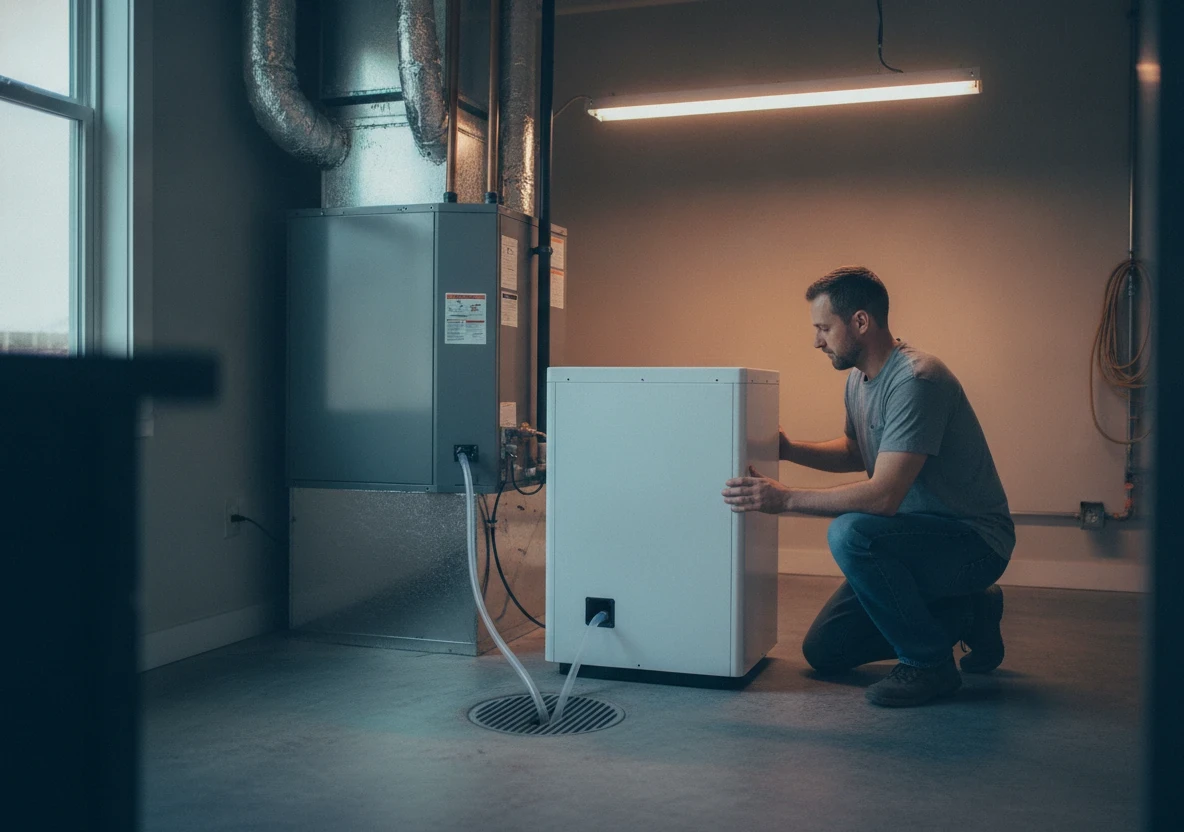
Yes. Whole-house and crawl space dehumidifiers should be serviced periodically, cleaning the coils and air filter, clearing the condensate drain, and checking the humidistat, fan, and refrigerant circuit. Portable units mostly need filter cleaning and coil care. Regular service keeps them efficient and prevents the clogs and frozen coils that cause most failures.
How often should a dehumidifier be serviced?
For a whole-house or crawl space unit, an annual professional service is ideal, often bundled with your HVAC maintenance. The washable filter should be cleaned every few weeks to a couple of months during heavy use. Systems that run hard in humid conditions benefit from more frequent checks to keep the coils clean and draining.
What maintenance does a dehumidifier require?
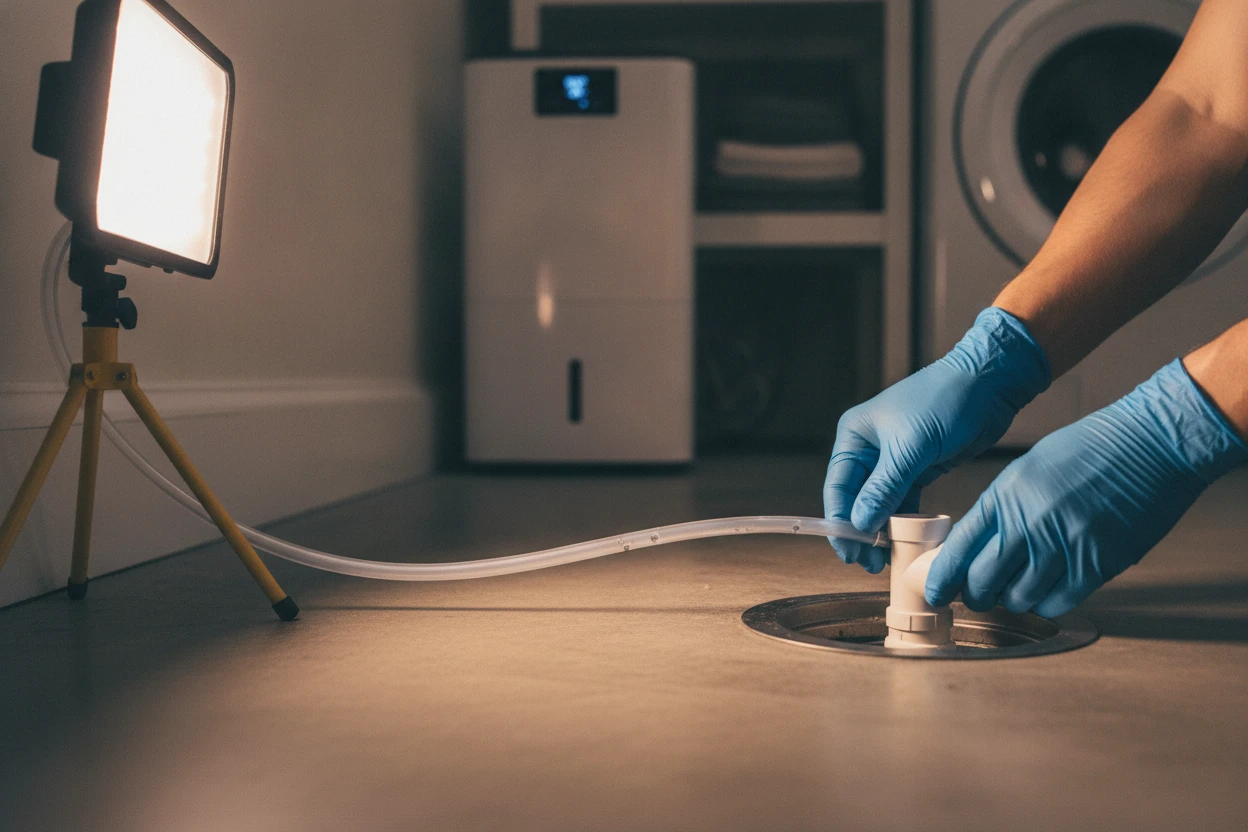
The essentials are cleaning or replacing the air filter, keeping the coils clean, making sure the condensate drains freely (and the pump works, if fitted), and confirming the humidistat holds the set level. On whole-house units we also check refrigerant and airflow. Most dehumidifier problems come from a neglected filter, dirty coils, or a clogged drain, all of which routine maintenance prevents.
What is a common problem with a dehumidifier?
The most common issues are a frozen evaporator coil (often from running in temperatures too cold for the unit or from dirty coils and low airflow), a full or faulty float and drain problem that shuts it off, a clogged filter, and eventually compressor failure. Many are preventable with cleaning and correct placement, which we address during service.
Why do most dehumidifiers stop working?
Most dehumidifiers stop working because of a failed compressor or sealed-system refrigerant leak, a tripped or faulty humidistat or float switch, or coils that ice up and choke airflow. Cheap portable units in particular tend to fail at the compressor after a handful of years. We diagnose whether it’s a simple fix or a case where replacement is the better value.
Are dehumidifiers worth repairing?
It depends on the unit and the fault. A whole-house or crawl space dehumidifier is usually worth repairing given its cost and integration. An inexpensive portable unit with a failed compressor is often cheaper to replace than to fix. We apply the same repair-versus-replace logic we use across HVAC and tell you honestly which makes sense.
What is the average lifespan of a dehumidifier?
Portable dehumidifiers typically last about 5 to 10 years, while quality whole-house and crawl space units, run and maintained properly, often last longer. Run time, cleanliness, and placement drive the difference. We track condition during service and let you know when replacement beats another repair.
How big of a dehumidifier do I need for a 2000 sq ft house?
Dehumidifiers are sized in pints of water removed per day, and the right capacity depends on both the square footage and how damp the space is. A roughly 2,000 square foot area that’s moderately damp often needs something in the mid-range, while very damp or wet conditions call for more. Our sizing tool above gives a ballpark, and we confirm it on-site.
Where should you not put a dehumidifier?
Don’t push a dehumidifier tight against a wall or furniture that blocks its intake and exhaust, and avoid very cold spaces below the unit’s rated temperature, where the coils will freeze unless it’s a low-temperature model. Keep it away from heavy dust sources that clog the filter. Good airflow and correct placement are essential, which is a big reason built-in whole-house units perform so consistently.
How many hours a day should I run a dehumidifier?
Rather than a fixed number of hours, run it as needed to hold indoor humidity in the healthy 30 to 50 percent range, which a built-in humidistat does automatically by cycling on and off. In a damp season that may be much of the day; in dry Sacramento weather it may barely run. Setting a target humidity, not a timer, is the efficient approach.
Does a dehumidifier run up your electric bill?
A dehumidifier does use energy, since it runs a compressor much like a small AC, but a right-sized, efficient unit controlled by a humidistat only runs when needed, which keeps the cost reasonable. An oversized-for-nothing or constantly running unit costs more. We size it correctly and set it to a target humidity so it isn’t working harder than it has to.
Can mold still grow with a dehumidifier?
A dehumidifier that keeps relative humidity below about 50 percent makes it very hard for mold to grow, which is exactly why they’re used in crawl spaces and basements. But it won’t remove mold that’s already there, and if it’s undersized, poorly placed, or the humidity still spikes, mold can persist. We size and place it to actually hold the target, and flag any existing mold that needs remediation.
When should you not use a dehumidifier?
Skip it when your indoor humidity is already in or below the healthy range, since over-drying below about 30 percent brings its own problems like static and dry sinuses. Also avoid running a standard unit in spaces colder than its rated temperature, where it will just ice up. If the air is too dry rather than too damp, a humidifier is the right tool instead.
Will a dehumidifier help with termites?
Indirectly. Subterranean termites and other wood-destroying pests are drawn to moisture and damp wood, so keeping a crawl space dry with a dehumidifier removes conditions they favor and helps protect the structure. It is not a termite treatment, though, if you have an active infestation you need a pest professional. We often pair crawl space dehumidification with better sealing and ventilation.
How much does it cost to run a dehumidifier?
Running cost depends on the unit’s wattage, how many hours it runs, and your electricity rate. An efficient, humidistat-controlled unit that only cycles on when needed keeps costs modest, while a unit running constantly costs more. Sizing it correctly for the space is the single biggest factor in keeping the bill down, which is why we size to the actual load.
What is the most reliable dehumidifier brand?
Several established brands make reliable whole-house and crawl space dehumidifiers, and for built-in units the install quality and correct sizing matter as much as the badge. We steer clear of the cheapest disposable portables, which have a poorer reliability and even recall history, and recommend serviceable units with real parts and warranty support. We’ll match the unit to your space and budget.
 Review on Google · June 2026