What is a commercial HVAC system?
A commercial HVAC system is the larger, higher-capacity equipment that heats, cools, and ventilates a business, most often rooftop packaged units, but also split systems, VRF, and chillers for bigger facilities. It runs on three-phase power, is sized in tons for the building’s load, and usually ties into building controls and zoning. It is engineered around uptime and code, not just a scaled-up home system.
What are the three types of commercial HVAC systems?
The three broad categories are rooftop packaged units (RTUs, the most common for small to mid-size buildings), VRF or variable refrigerant flow (efficient, zoned, great for multi-tenant and variable loads), and chilled-water systems with a central chiller (for large facilities). We help you match the type to your building size, layout, and budget.
What is the difference between commercial HVAC and regular HVAC?
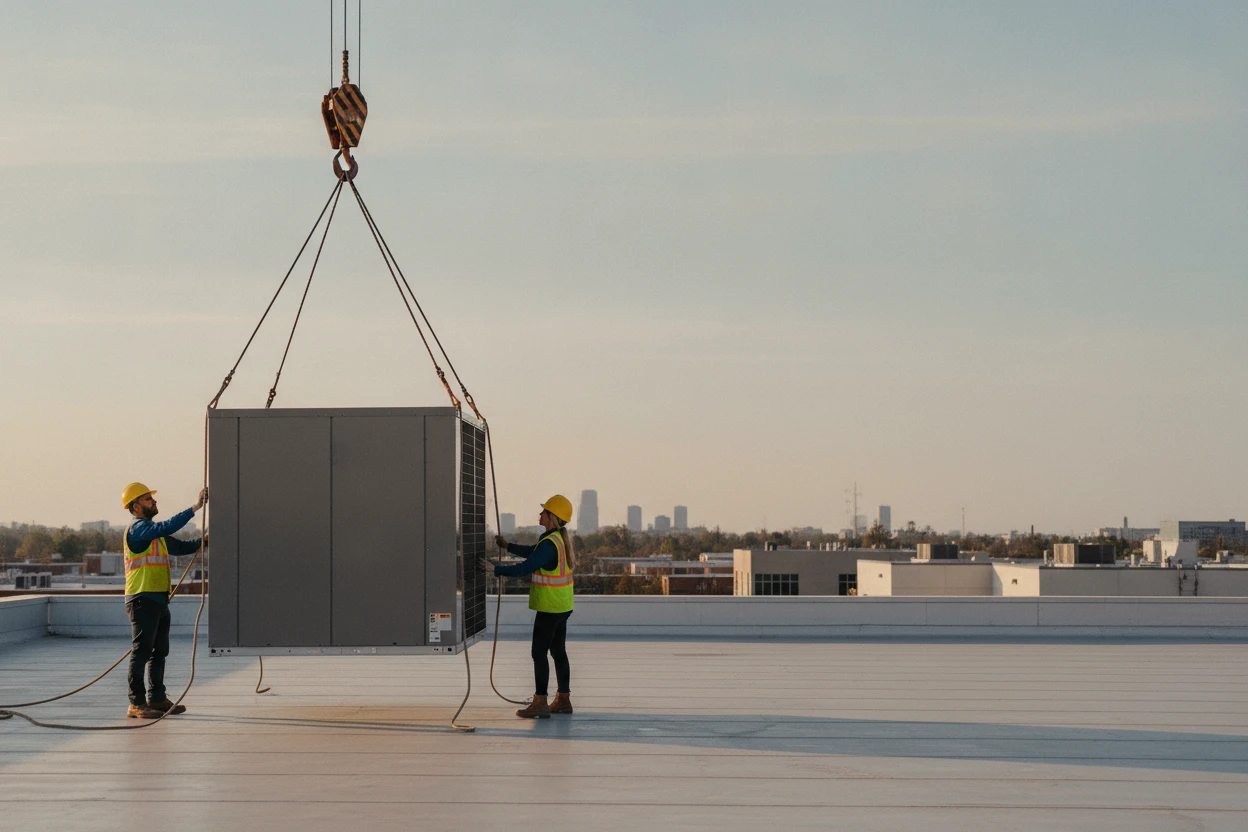
Commercial systems are larger, more powerful, and more complex, three-phase power, rooftop or central equipment, building automation, economizers, and zoning, sized for a building rather than a home. Installation involves cranes or rigging, structural and code considerations, and planning around business operations. It is a different discipline from residential, and we’re equipped for both.
How much does it cost to install a commercial HVAC system?
Commercial installation cost varies widely with the system type, total tonnage, building layout, and rigging, so it is quoted per project after a site assessment and load calculation. We give you a detailed written proposal with the equipment, scope, and timeline rather than a one-size number, and can present good, better, and best efficiency options.
How much does a commercial HVAC system cost per square foot?
Per-square-foot figures get quoted in the trade, but they vary so much by system type, tonnage, and building that they’re only a rough starting point. We prefer to size the actual load and quote the real project, which is more accurate than a blanket per-foot estimate. Ask us and we’ll scope your building.
How much is a commercial HVAC system for a 1,000 to 1,500 sq ft space?
A small commercial space like a 1,000 to 1,500 square foot suite typically needs a modest rooftop or split system, so it’s on the lower end of commercial pricing, but the exact number depends on the load, existing infrastructure, and rooftop access. We run a load calculation and give you a firm written quote.
What is the best commercial HVAC system?
There’s no single best, only the best fit. Rooftop units are cost-effective and space-saving for most small to mid-size buildings; VRF wins on efficiency and zoning for multi-tenant or variable-load spaces; chillers suit large facilities. We recommend based on your building, load, and how you use the space rather than pushing one type.
What is the most reliable commercial HVAC brand?
The major commercial brands, Trane, Carrier, Daikin, Lennox, and York among them, are all reliable when properly sized and installed. Installation quality and maintenance matter more to real-world reliability than the badge. We’re brand-independent, so we recommend the equipment that fits your building and budget, then install it right.
How long does a commercial HVAC system last?
A well-maintained commercial system typically lasts 15 to 20 years, with rooftop units on the shorter end under heavy use and chillers often longer. Correct sizing, a clean install, and a maintenance contract are what get a system to the top of that range and protect the investment.
What are the three basic types of commercial HVAC ducting systems?
Commercial duct systems are generally single-zone (one thermostat, one area), multi-zone (one unit serving several zones with dampers), or variable-air-volume (VAV, which modulates airflow to each zone for efficiency). The right approach depends on the building’s layout and how its spaces are used, which we design around.
Is there a tax credit for commercial HVAC installation in 2026?
Commercial buildings may qualify for the 179D energy-efficient commercial buildings deduction for qualifying efficiency upgrades, which is separate from the residential 25C credit that expired at the end of 2025. Eligibility and amounts depend on the project and your tax situation, so confirm with your tax professional. We provide the equipment efficiency documentation you’ll need.
How much does a new commercial HVAC system cost?
It’s priced per project by system type, total tonnage, and building specifics, so we scope it with a site visit and load calculation and give you a written proposal. Financing and, where applicable, the 179D deduction can offset it, and we present efficiency tiers so you can weigh upfront cost against long-term energy savings.
How often should a commercial HVAC system be serviced after install?
At least twice a year, and quarterly for heavy-use buildings. We recommend setting up a maintenance contract at installation, both to protect the manufacturer warranty and to keep the new system at its rated efficiency. It’s the cheapest way to protect a significant investment.
What are common commercial HVAC problems a good install prevents?
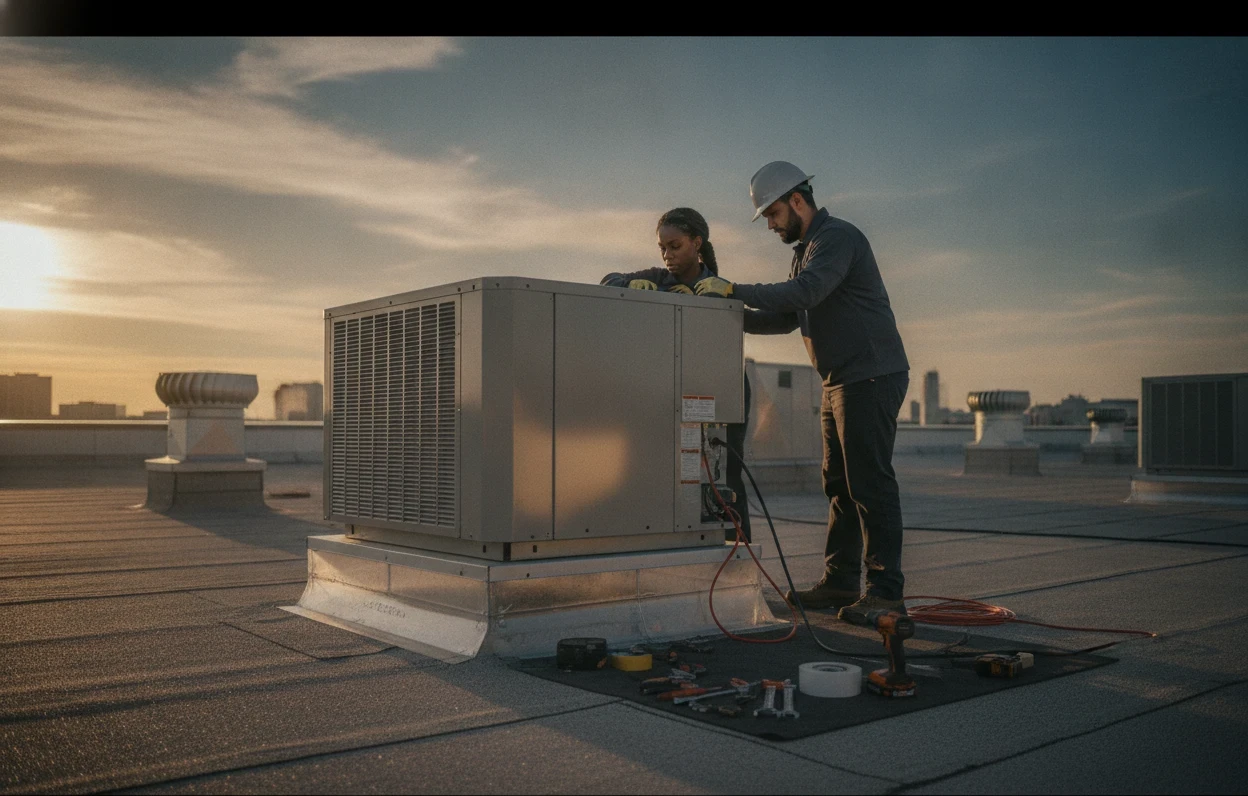
Many chronic issues, hot and cold zones, high bills, short-cycling, and premature failure, trace back to an oversized or undersized system, poor duct design, or a rushed install. A load-calculated design, correct ductwork, and proper commissioning prevent them from the start, which is why we don’t cut corners on sizing and startup.
 Review on Google · April 2026